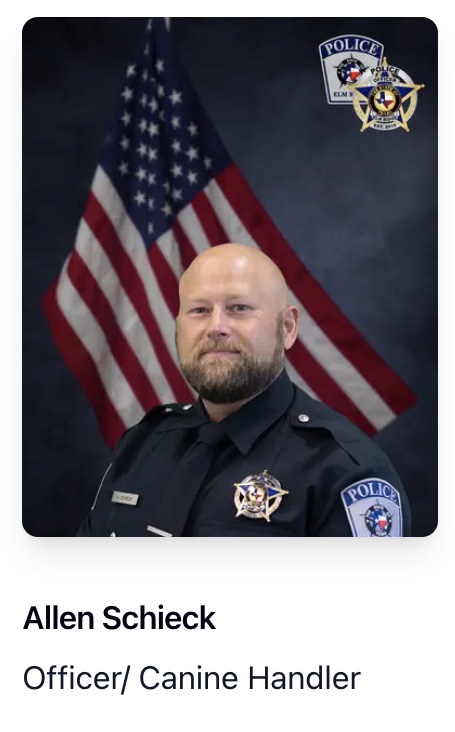
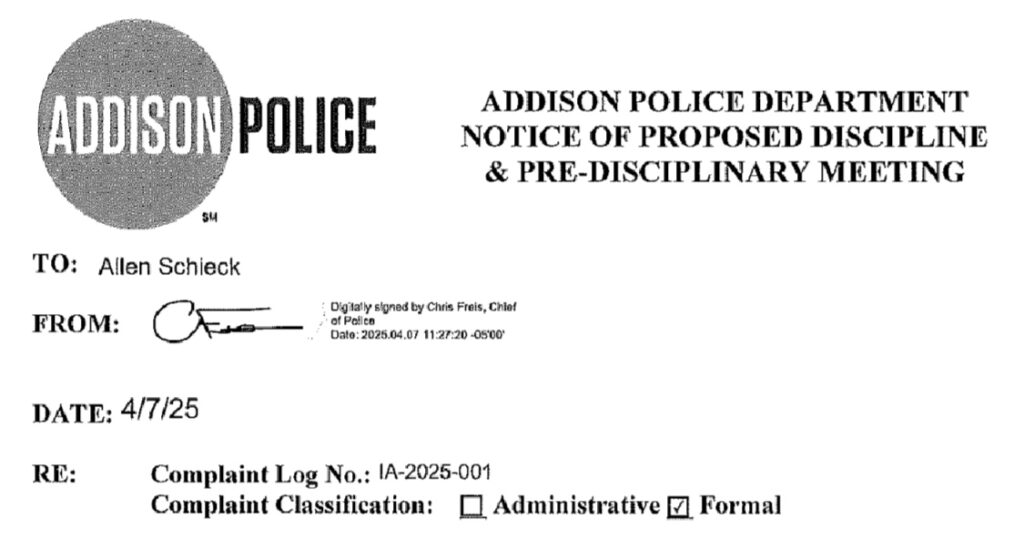
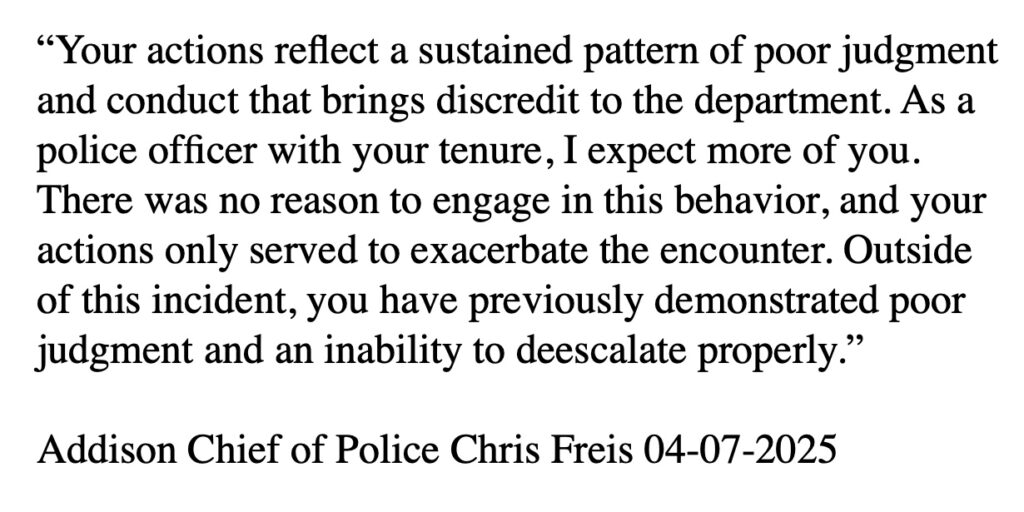

For seventeen years, Alan Schieck wore the badge in Addison, Texas. That tenure did not end with a gold watch or a celebratory retirement; it ended with a formal declaration of failure. Terminated for gross incompetence and documented as a consistent danger to society, Schieck’s record in Addison was defined by insubordination, firearm violations on school grounds, and a “sustained pattern” of performance deficiencies that no amount of coaching could fix.
Yet, in the ecosystem of local law enforcement—where the ideology of the “Blue Shield” often mirrors the most clinical and cold eugenicist philosophies—a failed asset is rarely discarded. Instead, he was recycled.
Despite a history that includes the documented stalking of citizens and reckless endangerment in school zones, Alan Schieck was not stripped of his peace officer license. He was given a clean slate, a raise, and a promotion by the Elm Ridge Police Department. This wasn’t just a hire; it was a deliberate choice by Elm Ridge leadership to ignore a mountain of “Signal” in favor of the “Noise” of a fresh uniform.
This article documents the “Rebirth” of Alan Schieck. We dig past the fresh cruiser and the new K9 unit to ask the only question that matters to the citizens of the Elm Ridge community: Did the man change his ways, or has the nightmare simply found a new jurisdiction to haunt?
Read on to discover the truth the department tried to hide behind a $180 paywall.
1. The Original TPIA Request (April 8, 2026)
The primary Public Information Request was submitted to the Elm Ridge Police Department on April 8, 2026. You requested a comprehensive set of records, including:
- Personnel & Disciplinary Records: All internal affairs (IA) investigations, use of force reports, citizen complaints, and Schieck’s TCOLE F-5 (Report of Separation) from his previous employer, the Addison PD.
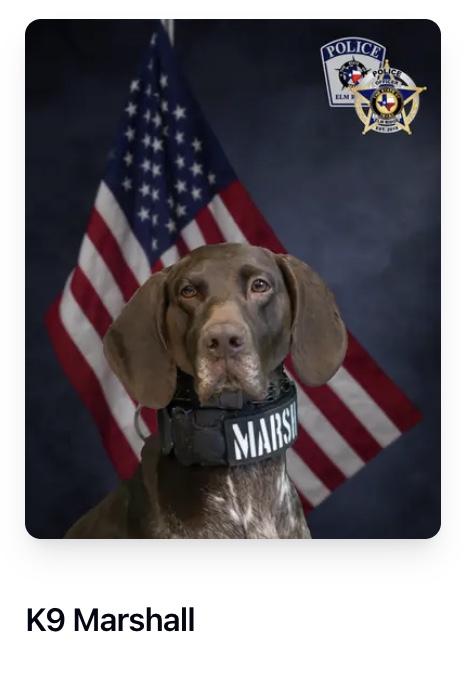
- K9 Activity: Detailed logs for “K9 Marshall,” including locations of stops, reasons for deployment, and whether “sniffs” resulted in contraband discovery.
- Operational Logs: A full list of arrests and citations issued by Schieck since his hire date.
- Internal Communications: Emails and text messages between department supervisors regarding Schieck’s hiring or performance.
2. Complaint to the City of Elm Ridge
You initiated a formal complaint regarding the “supervision and retention” of Officer Schieck, which the department acknowledged on April 9, 2026.
- Allegations of Negligence: You alleged the department committed “Negligent Retention” by employing Schieck despite Addison PD records stating a “loss of confidence” in him due to a “sustained pattern of poor judgment”.
- Brady Violations: You argued the department has a mandatory duty to disclose Schieck’s disciplinary history to the Denton County District Attorney for the “Brady List”.
- Departmental Culture: You reported that a duty sergeant explicitly stated he “didn’t want to know” about the evidence when you attempted to file it in person, which you cited as an obstruction of professional standards.
3. The “Paper Trail” of Obstruction
The correspondence from the Chief of Police and the City Attorney shows a consistent effort to defend the hire and limit the release of records:
- Chief Kennedy’s Defense: On April 13, Chief Brandon Kennedy asserted that the hiring process followed all TCOLE mandates and that he holds “sole discretion” over his employees. He claimed Addison PD records did not show Schieck had ever lied, only that a supervisor “did not recall” certain items.
- The Missing F5 Form: When you demanded the F5 Separation Report, City Attorney Chris Metcalf claimed the department “does not have a copy”. He later explained that the Chief only viewed the documents via a “time-limited” digital portal provided by Addison and never downloaded or stored a physical copy.
- Administrative Friction: The city issued a $180 cost estimate for the records and initially refused to accept cash or digital payments, requiring a money order. You formally objected to this as a violation of federal legal tender laws and a “tactical maneuver” to discourage your investigation.
The June 10th Incident: Harassing Before Handling a Call
The Elm Ridge Police Department wants you to believe Officer Allen Schieck was a ‘Master Peace Officer’ ready to serve on day one. The records tell a darker story.
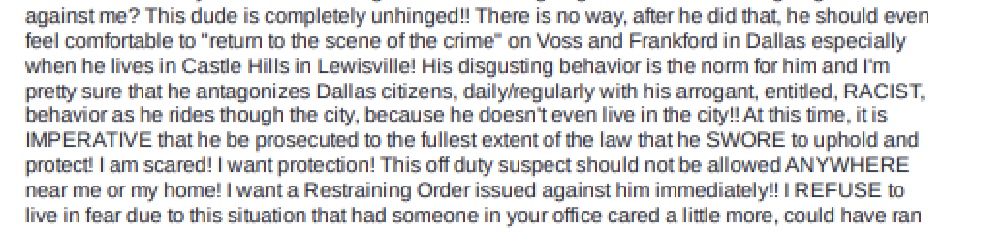
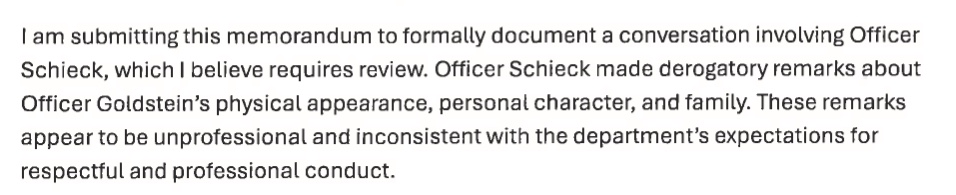
On June 16, 2025, Schieck wrote his first traffic citation for the city. But six days prior, the department had already received an Internal Affairs complaint from a female coworker, Ms. Mora. The details of this complaint are a haunting echo of the Laciana Archer case in Addison—the very case that cost Schieck his career there.
Schieck didn’t even last a week on the job before his ‘concerning behavior’ resurfaced. Instead of terminating the experiment then and there, Chief Kennedy allowed this man to stay in uniform, eventually handing him the leash to K9 Marshall. If the department claims they didn’t know who they hired, the Mora complaint proves they knew exactly who he was by the second week of June.
The May 1st Confirmation: The File That “Vanished”
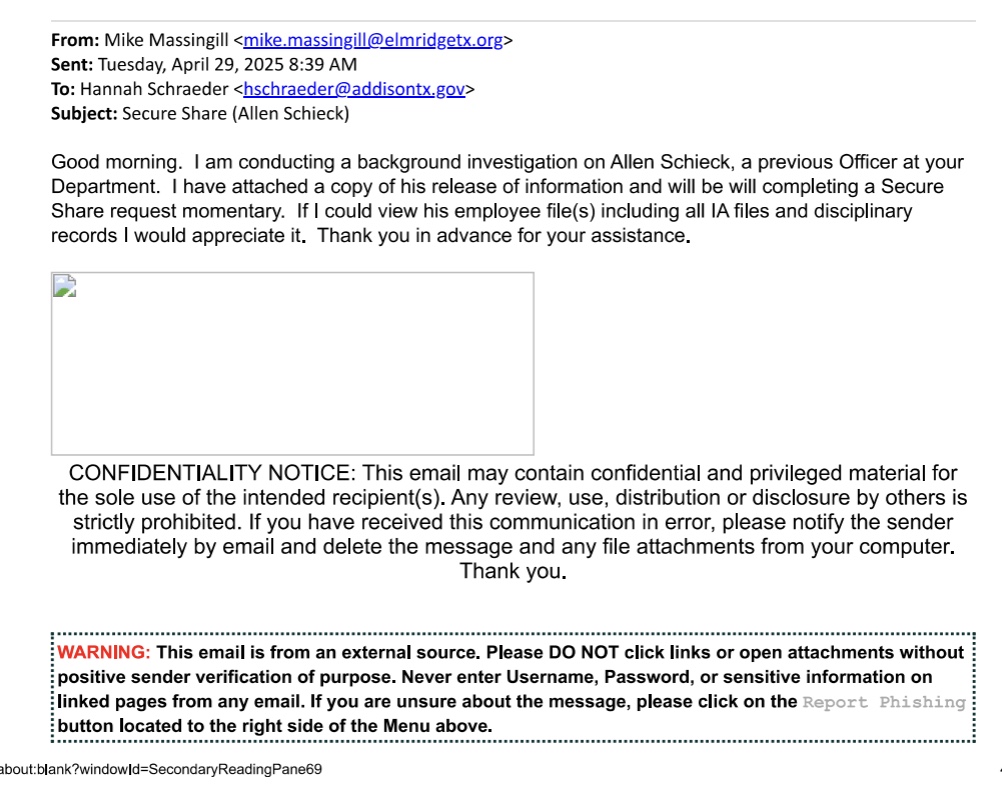
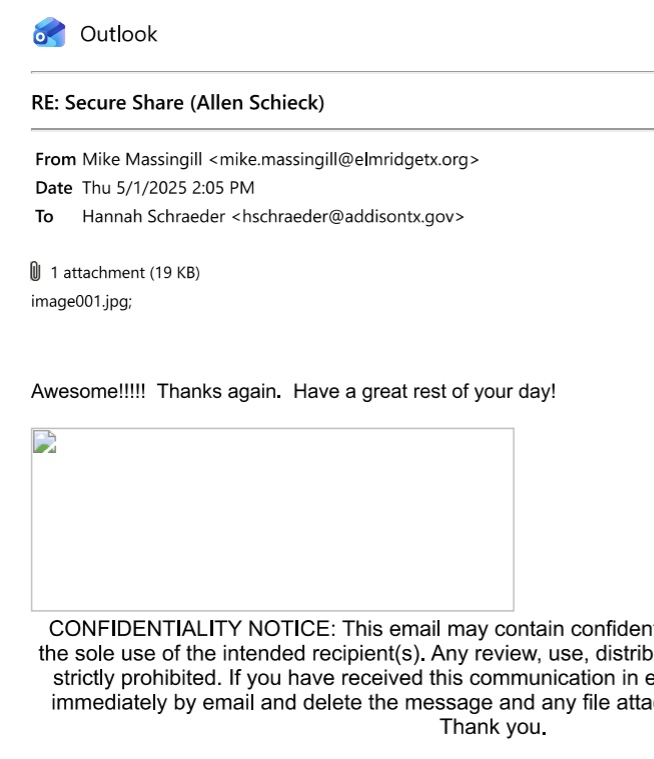
On May 1, 2025, Assistant Chief Mike Massingill sent a clear signal: The Schieck File had arrived. Following Officer Schieck’s April 16th authorization, the Elm Ridge Police Department took possession of the 17-year history that Addison PD used to terminate him.
Fast forward to April 29, 2026. City Attorney Christopher Metcalf II now claims this file—the very foundation of their ‘thorough’ background check—simply ‘does not exist.’
We are left with two possibilities, neither of which involves the truth:
- The ERPD is so administratively incompetent that they lost the most controversial personnel file in their history within 12 months.
- The ERPD is actively tampering with governmental records to protect a predator and hide the fact that they gave a ‘Master Peace Officer’ title to a man Addison deemed a danger to society.
The paper trail doesn’t lie. Massingill said they had it. Metcalf says they don’t. We have the receipt. Who is lying to the citizens of Elm Ridge?
The “Damned if You Do” Logic: A Constitutional Crisis
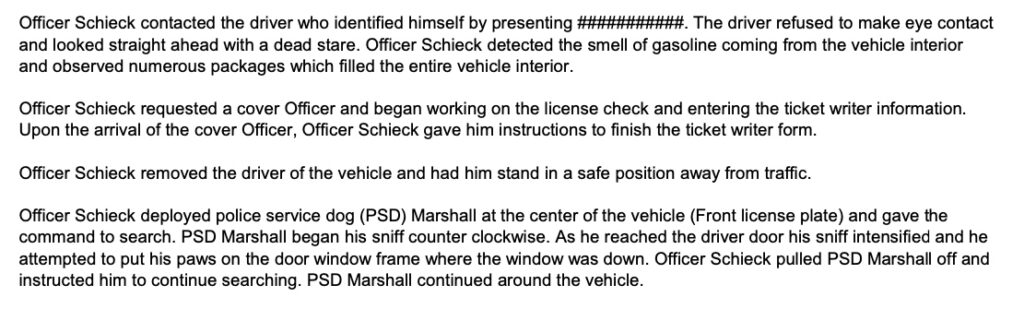
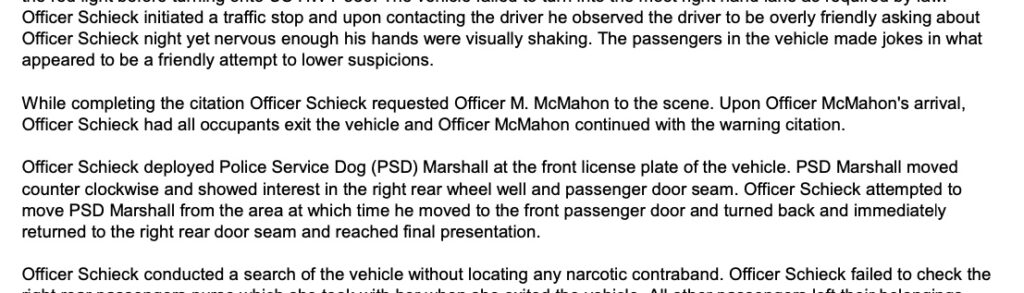
If you look at Officer Allen Schieck, you’re suspicious. If you don’t look at him, you’re suspicious. According to nearly a year of K9 deployment logs, there is no ‘correct’ way to sit in your car in Elm Ridge.
We analyzed the data, and the results are staggering. In a year of deployments, Schieck has found exactly zero grams of hard drugs. The ‘big catch’ for this Master Peace Officer? One bong. In 2022, 70% of Denton voters passed Proposition B, a clear mandate to stop the war on marijuana. Yet, Schieck continues to use a police dog to hunt for glass pipes and plant matter, ignoring the will of the people and the Fourth Amendment.
These logs don’t document a drug interdiction program; they document a state-sponsored harassment campaign. The dog isn’t there to find drugs—it’s there to provide a ‘legal’ excuse to tear apart the cars of people who dared to either look, or not look, at Alan Schieck.
The Trash-Pull Pretext: Why Being ‘Too Friendly’ Makes You a Target
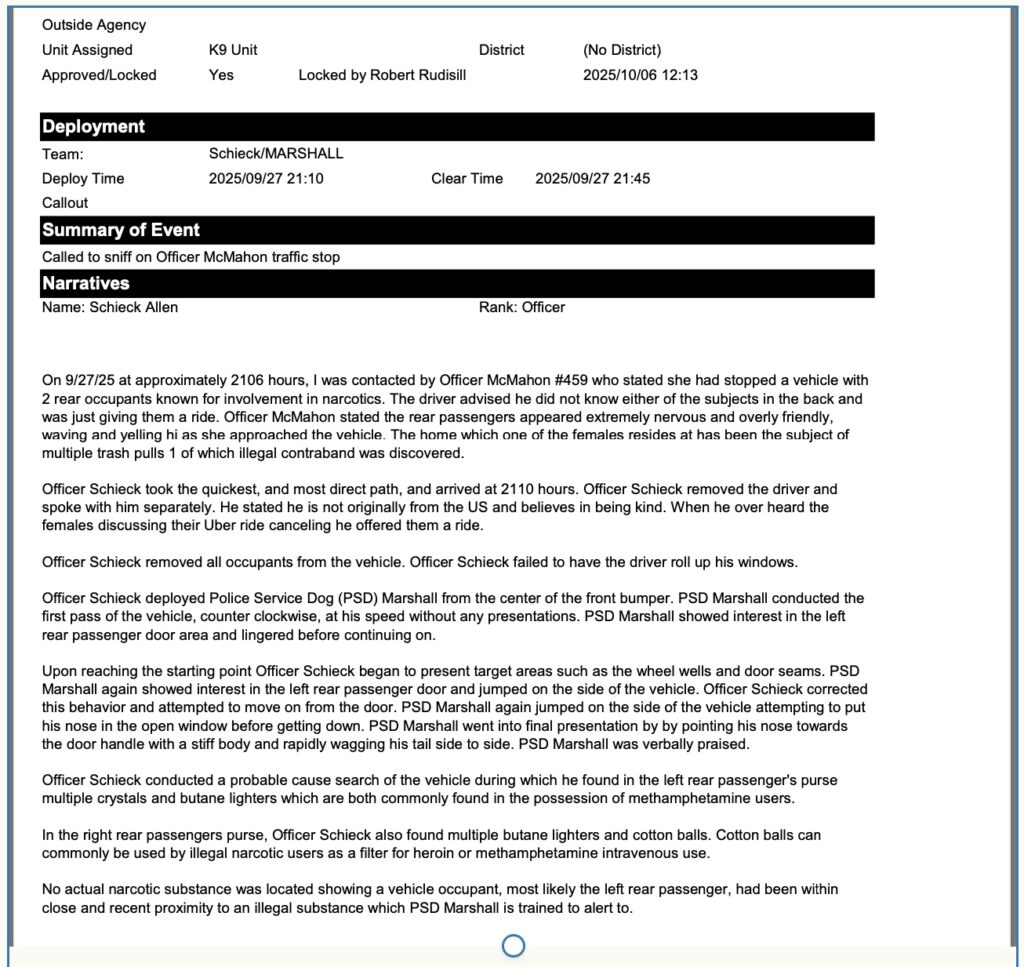

We’ve uncovered a report involving Officer McMahon and Officer Allen Schieck that should chill every resident of Elm Ridge. It reveals that the department isn’t just watching you on the road—they are digging through your private waste at night to justify harassing you the next morning.
The “Friendly” Indicator
According to the report, a driver was flagged as “suspicious” because the passengers appeared “overly friendly, waving and yelling hi.” In the world of Elm Ridge policing:
- Stare straight ahead? Suspicious.
- Look at the officer? Suspicious.
- Be friendly and wave? Extremely suspicious.
The Tactical Loophole: Trash Pulls
Because the occupants were “too friendly,” the department conducted “multiple trash pulls” at a residence. This is a tactic where officers wait for you to put your bin on the curb—at which point the law considers it “abandoned property”—and they dig through it without a warrant.
By finding “illegal contraband” (likely trace amounts of the very substance Denton voters decriminalized), they create a “permanent” pretext. They now have “Reasonable Suspicion” to pull over any vehicle leaving that driveway at any time, effectively putting that household under a state of permanent surveillance.
The Evidence Trail
This isn’t just “good police work”; it’s a manufactured crisis.
- Step 1: Flag a citizen for an arbitrary behavior (waving).
- Step 2: Violate their privacy by digging through their garbage.
- Step 3: Use the “find” to justify a high-stress traffic stop with a K9 deployment the next day.

Allen Shieck himself finds this “Possum Patrol” behavior very suspicious.
The Gatekeepers of Ignorance
‘I Don’t Want to Know’—Elm Ridge PD’s Policy of Willful Blindness
What happens when you follow the rules of a department that doesn’t follow its own?
The Elm Ridge website tells citizens to walk in and ask for ‘Professional Standards’ to file a complaint. I did exactly that. I brought the ‘Schieck Files’—the documented proof of Allen Schieck’s history of stalking and incompetence—and tried to hand them to the duty Sergeant.
The response wasn’t ‘Thank you for bringing this to our attention.’ It wasn’t ‘We will investigate.’ Instead, the Sergeant looked at the evidence of a predator in his ranks and said, ‘I don’t want to know.’
This is the policy of the Elm Ridge Police Department: If we don’t look at the truth, we don’t have to answer for it. They treat their own website as a PR stunt and their ‘Professional Standards’ as a shield against accountability. We have the recording. We have the files. And now, we have proof that they are choosing to stay in the dark while Allen Schieck patrols your streets.
Five Minutes of Broken Faith
The Mirror of Misconduct.
Do as I Say, Not as I Do—The Schieck Citation Logs
In Elm Ridge, the law is a one-way street. We have obtained Officer Allen Schieck’s citation logs, and they reveal a man who spends his days punishing citizens for the exact behaviors that got him fired from Addison.



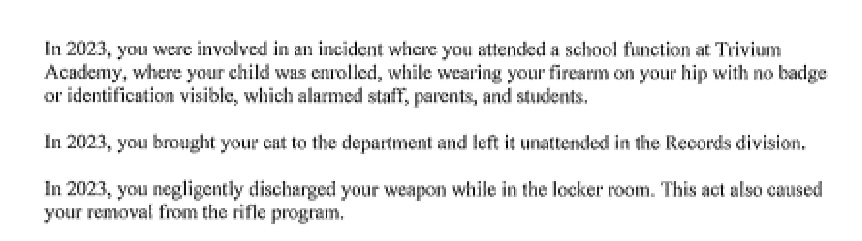
Imagine being pulled over for a school zone violation by a man who was disciplined for doing 63 mph on the wrong side of the road in that same zone. Imagine being charged with a weapons violation by a man who was disciplined for taking his gun to school. Imagine being charged with ‘Interfering with Public Duties’ by a man whose personnel file is a masterclass in insubordination.
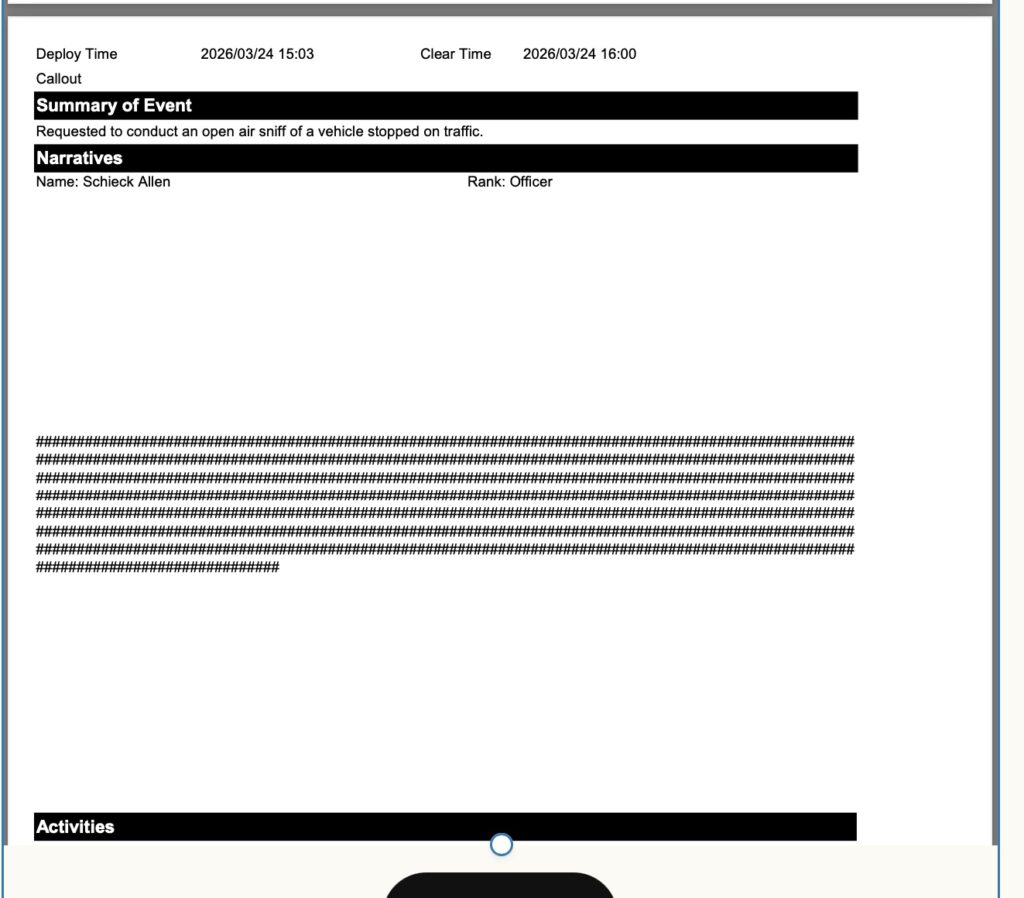
Perhaps most disturbing is Schieck’s ‘reporting’ style. We have found incident reports where the description of the crime is nothing more than a string of hashtags: ################. This is the man Elm Ridge calls a ‘Master Peace Officer.’ He doesn’t document facts; he mocks the very process of justice. If Schieck is the one testifying against you, you aren’t being judged by a peer—you’re being processed by a hypocrite.
The Providence Village Standoff: When Petty Tyrants Meet Real Danger
For nearly a year, Officer Allen Schieck and the Elm Ridge Police Department have specialized in the “Low-Stakes Siege.” They have mastered the art of digging through your trash at 3:00 AM, deploying K9s because you “looked friendly,” and filling incident reports with hashtags instead of facts.
But on April 20, 2026, the “Noise” of Schieck’s petty ticket-mill met the “Signal” of a real-world tragedy. The results were a damning indictment of the department’s actual utility.
The Institutional Hand-Off
When a 57-year-old violent offender held a woman and a child hostage in Providence Village, the Elm Ridge PD—the same department that claims it needs “Master Peace Officers” like Schieck—found itself completely out of its depth.
- The Chain of Failure: Local response failed, so they handed it to Aubrey. Aubrey was overwhelmed, so they called McKinney SWAT. McKinney couldn’t resolve it, so they called the FBI. The FBI eventually had to fly in a Hostage Rescue Team (HRT) all the way from Virginia—the elite of the elite—to do the job that local taxes are supposed to cover.
The Schieck Paradox: Where was the ‘Master Peace Officer’?
While the FBI was using flashbangs and snipers to rescue a domestic violence victim, where was Allen Schieck?
- According to his logs, he was likely busy stalking a “suspiciously friendly” driver or searching for a bong in a trash can.
- The Reality: We pay for “Master Peace Officers” to handle the most dangerous calls for service: domestic disputes. Yet, when a domestic dispute turned into a 30-hour hostage crisis, the ERPD was relegated to the sidelines, waiting for the federal government to clean up their backyard.
The “Piece of Paper” vs. the Real Threat
The victim’s brother noted that a protective order is “just a piece of paper” because the suspect wasn’t a law-abiding citizen.
- The ERPD Failure: The suspect, Michael Miller, was already in jail in March for aggravated assault but was released weeks before the standoff. While Elm Ridge PD was obsessively monitoring the law-abiding residents of the district, a violent felon was allowed to return to the community and initiate a multi-day siege.

“It went bang and scared the piss out of me.”
“It Went Bang”: The Terrifying Incompetence of the ‘Master’ Peace Officer
The unsealed archives of Allen Schieck’s career reveal a man who isn’t just a “Nightmare” for the public—he is a liability to his own uniform. While Elm Ridge leadership attempts to sell him as a “Master” of the craft, internal IA documents tell a story of terrifying incompetence that likely explains why the department was paralyzed during the recent 30-hour hostage crisis.
In one documented incident, Schieck managed to discharge his firearm inside the breakroom—a place where officers should be safest. When confronted with his own reckless failure, Schieck’s response wasn’t one of professional accountability; it was a text message that stripped away the tactical facade:
“It went bang and scared the piss out of me.”
This is the “Signal” cutting through the “Noise” of Chief Kennedy’s defense. We are paying for a front-line response comprised of individuals who are startled by their own tools. This admission proves that the department didn’t call the FBI because they wanted to—they called the FBI because they know Allen Schieck is a danger to society every time he reaches for his holster.
After reading all of this, what are your thoughts? Do you believe Schieck when he says he ‘lost’ the prisoners wallet?
