The Keller Springs Road project serves as a case study in what critics of municipal overreach call the “Bait and Switch” model of infrastructure—a process where a community is sold a vision of “improvement,” but is ultimately left with a legacy of debt, delays, and a degraded final product.
Here is the anatomy of the fiasco as the ultimate municipal bait and switch:
1. The Bait: The “Signature Gateway” (2020)
The project began with a glossy, high-definition pitch. The “Bait” was a $25 million vision of a revitalized corridor that would serve as the Town’s “Signature Gateway.”
- The Promise: Residents were sold on “Context Sensitive Design”—wider sidewalks, lush landscaping, and high-end aesthetics that matched the “Addison Way.”
- The Hook: By framing it as a “once-in-a-generation” necessity for the town’s image, the Town secured the authority to move forward with massive bond funding.
2. The Switch: The “Extraction Phase” (2021–2024)
Once the public had “bought in” and the debt was issued, the project’s nature shifted from an infrastructure goal to a financial instrument.
- The Debt Load: While the road sat untouched, the Town began paying interest on the bonds. This is the Negative Arbitrage phase, where the “Bank of Crime” (JPMorgan) collects interest on money the town borrowed but hasn’t yet used for the promised purpose.
- The Delay: Year after year, the project was pushed back. In the world of municipal extractions, delays are not accidents—they are the mechanism by which interest-carrying costs are maximized before the first shovel even hits the dirt.
3. The “Value Engineering” (The Shrinking Product)
As the years passed and “inflation” (the common excuse for municipal mismanagement) set in, the “Signature Gateway” began to disappear.
- The Downgrade: To stay within any semblance of a budget after years of interest payments and consultant fees, the Town began “Value Engineering.”
- The Result: The high-end finishes were stripped away. The “monumental” features were scaled back. The community is now paying the 2026 price for a 2020 vision that has been reduced to a basic road-widening project.
4. The Final Hook: The SIB Loan & Perpetual Debt
The ultimate “Switch” occurred when the Town realized the original bond money wasn’t enough to cover the “Pudding Era” of mismanagement.
- The SIB Loan: The Town entered into a $44 million State Infrastructure Bank (SIB) loan. This effectively tripled the liability for the corridor.
- The math is grim: The Town is now spending nearly $70 million (between bonds and SIB loans) for a project originally pitched at $25 million.
5. The Aftermath: The “Hardware” vs. the “Render”
If you look at the 2025 ACFR, the “Render” still looks fine—the Town claims it is building “Capital Assets.” But the “Hardware” tells a different story:
- The Heist: The residents of Keller Springs didn’t get a “Signature Gateway.” They got five years of traffic cones, “pudding” patches on the road, and a per-capita debt burden that has soared to over $16,000 per person.
- The Winners: The banks, the bond attorneys, and the consultants (like Kimley-Horn) who have billed millions in “Special Services” while the actual pavement remained unfinished.
Summary: The Keller Springs Road fiasco wasn’t a failure of engineering; it was a success of financial engineering. It transitioned the Town from a position of “Cash Rich/Debt Free” to “Debt Heavy/Cash Illusion,” all while promising a road that has become the most expensive stretch of asphalt in Addison’s history.
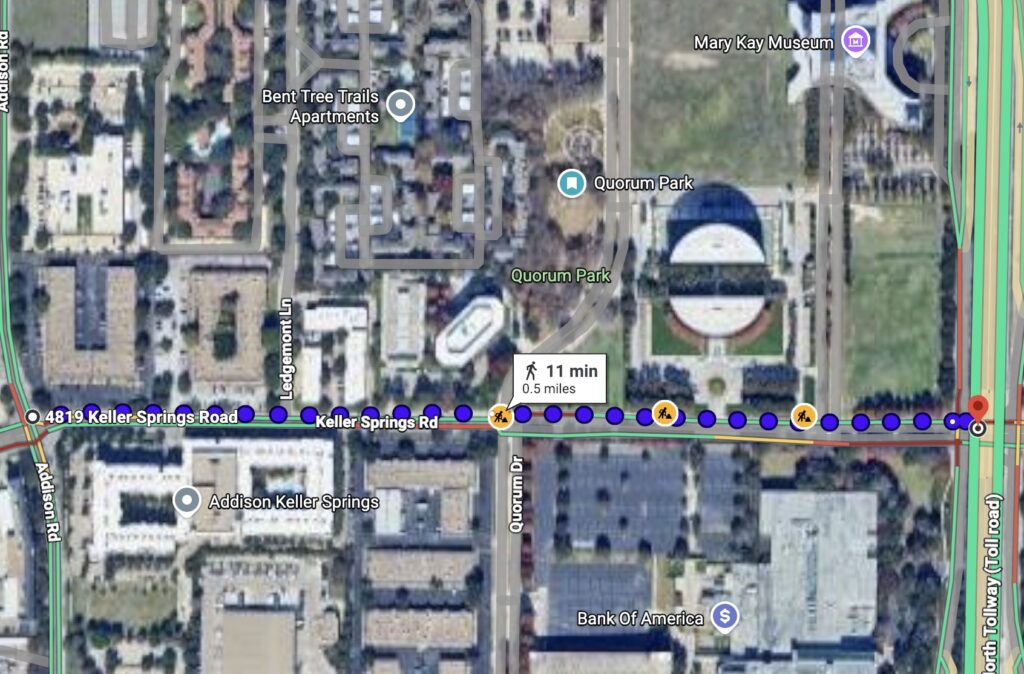
Keller Springs Road, the section in question is a half a mile.
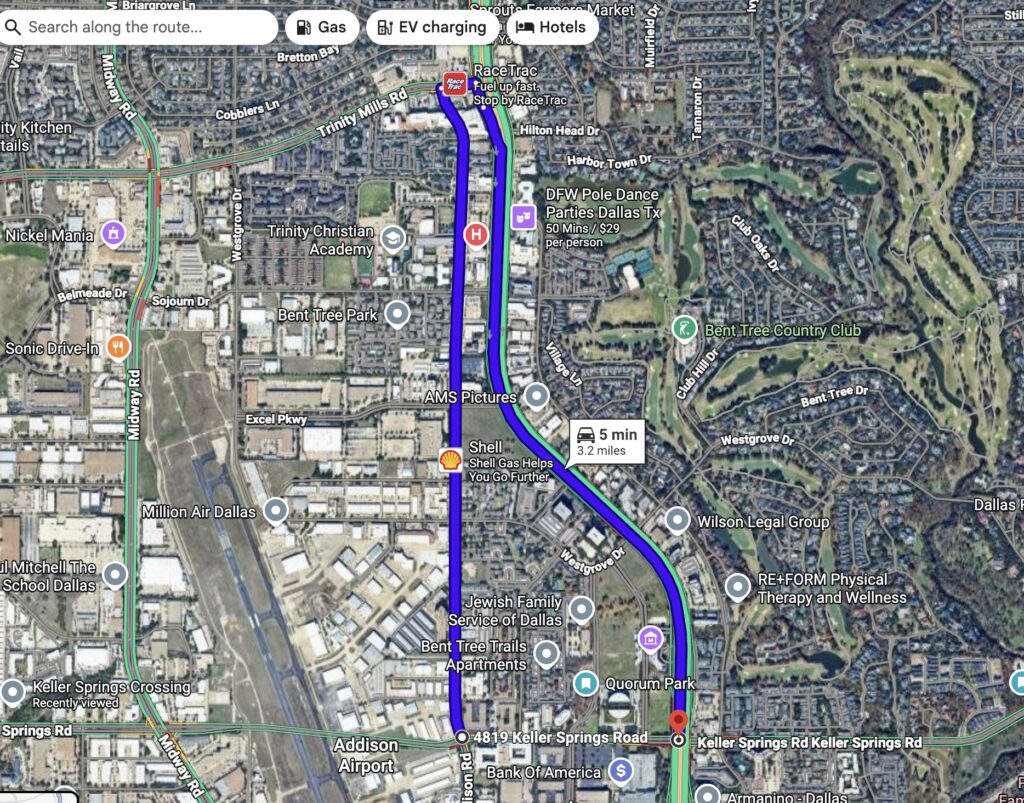
7 years and a $100 million dollars of improvements later, it is faster to drive 3.2 miles out of the way and avoid the road.
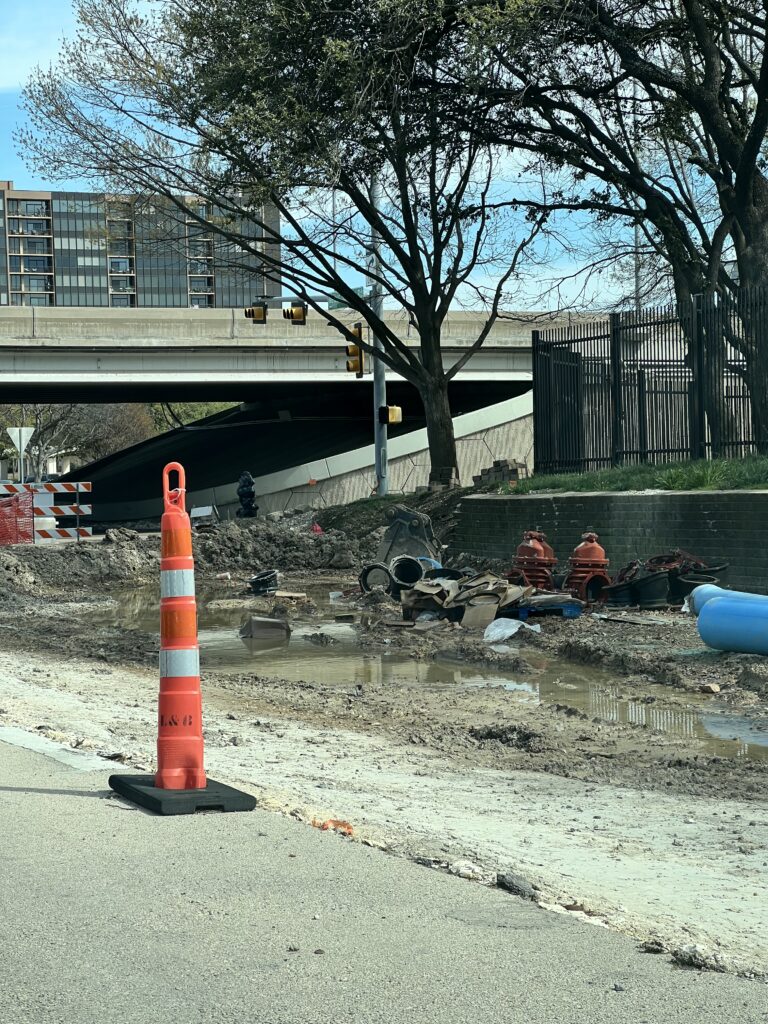
They work two days a month.
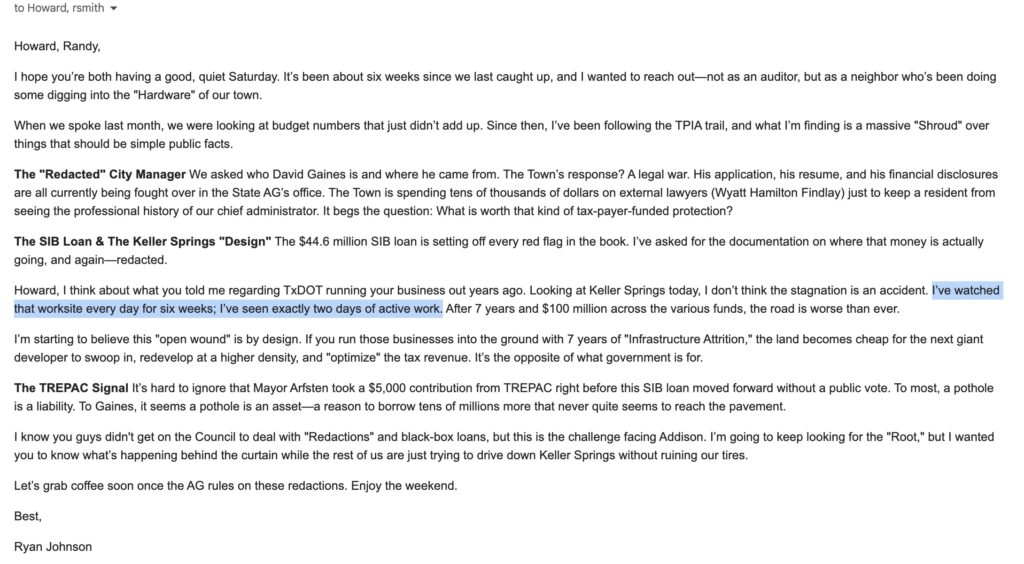
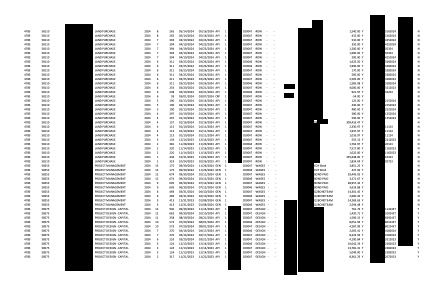
When you ask where the money is, the answers are redacted.
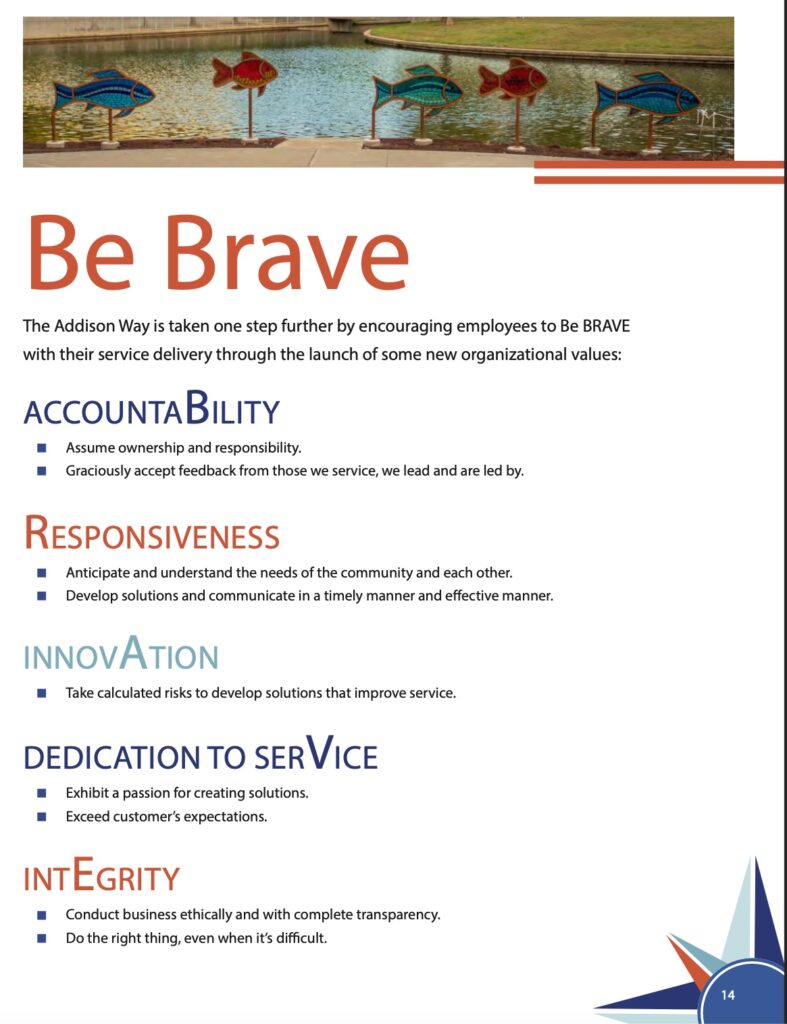
The city claims this is conducting business with complete transparency.
