Headline: Ollantaytambo: Where the Mountain Itself Whispers of a Lost Civilization
(Sub-headline): Forget the Textbooks – This Andean Fortress Reveals a History Far Older and More Advanced Than We’ve Been Told.
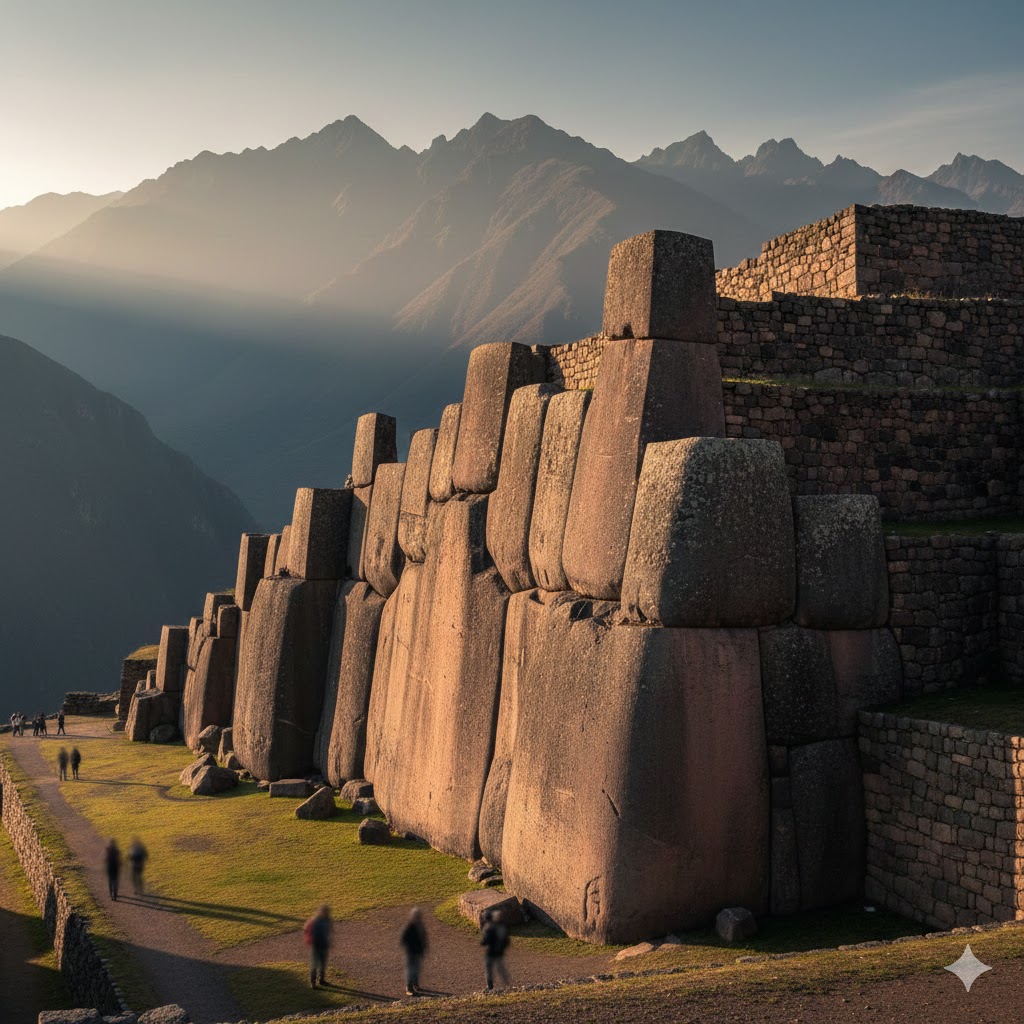
For many, names like Giza, Stonehenge, or even Baalbek instantly conjure images of impossible ancient feats. But there’s a site nestled high in the Peruvian Andes, in the heart of the Sacred Valley, that deserves equal, if not greater, attention: Ollantaytambo. This isn’t just an Inca fortress; it’s a living textbook of forgotten history, offering undeniable proof of a civilization far more advanced than our current narrative allows.
The Unmistakable Signature: Two Civilizations in One Place
Step onto the terraces of Ollantaytambo, and your eyes immediately discern two distinctly different eras of construction. It’s a phenomenon known as Superposition of Technologies, and once you see it, you can’t unsee it:
- The Inca Layer: The upper sections of the site, the intricate agricultural terraces, and many of the smaller structures, display the exquisite, yet clearly recognizable, stonework of the Inca. These masterful masons used local fieldstones, fitted with impressive precision using hammer and chisel, often employing smaller filler stones (pachillas) to achieve tight joins. This work is magnificent, a testament to their skill and ingenuity.
- The Megalithic Foundation (The “Basement”): Then, you encounter the true mystery. The lower, foundational layers, particularly the awe-inspiring Wall of the Six Monoliths at the Temple of the Sun. Here, you find colossal blocks of pink rhyolite, each weighing an estimated 50 to 80 tons. These are cut, shaped, and fitted with such micro-millimetric precision that a razor blade cannot be inserted between them. There is no mortar, no filler stones—just perfect, seamless joins.
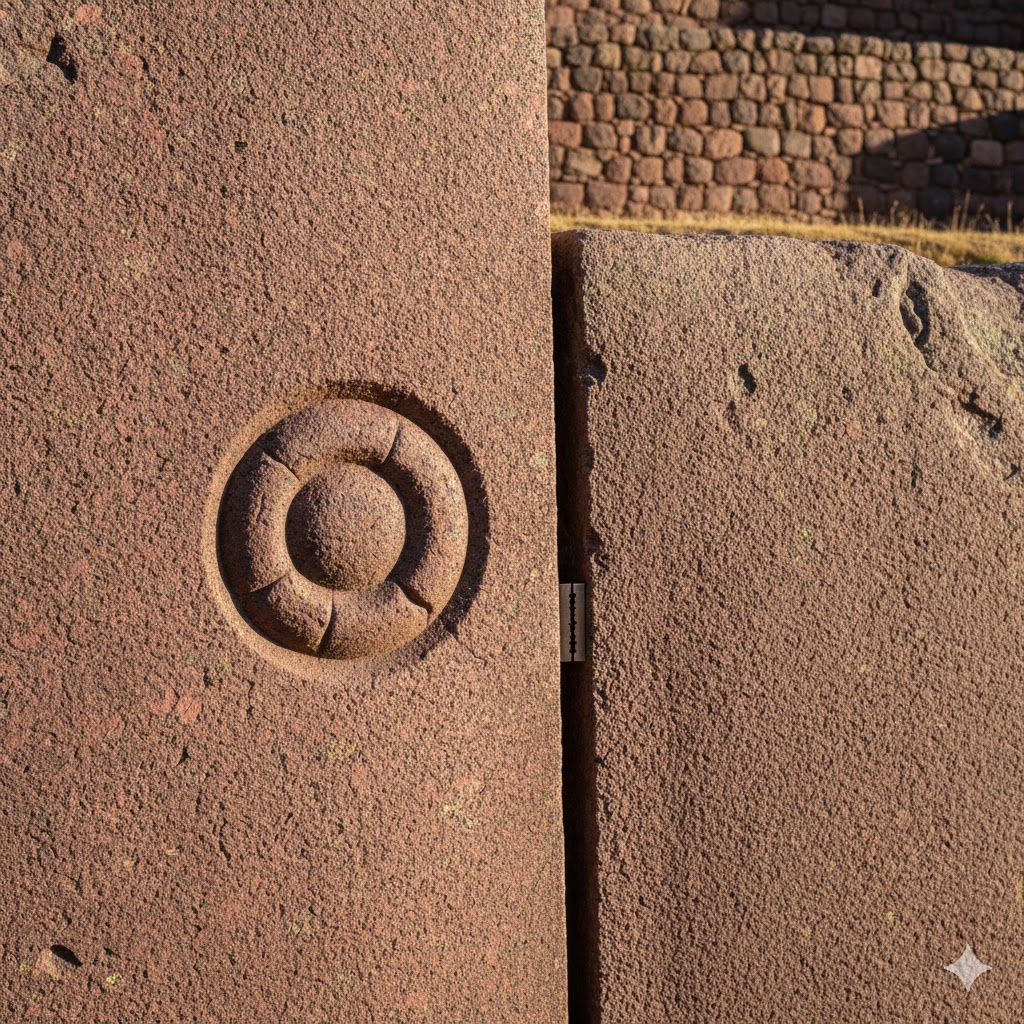

The “Baalbek Connection”: A Global Anomaly
The immediate impression for many, when viewing these foundational blocks, is a stark parallel to sites like Baalbek in Lebanon. At Baalbek, the Roman Temple of Jupiter stands atop the legendary Trilithon—three foundation stones each weighing approximately 800 tons. The Romans, like the Inca, built magnificent structures, but their construction methods couldn’t explain the colossal, hyper-precise foundation upon which they rested.
This observation at Ollantaytambo leads to an inescapable conclusion: the Inca did not build these megalithic foundations. They inherited them.
These immense stones, quarried miles away at Kachiqhata, transported across the Patacancha River, and somehow lifted hundreds of feet up the mountainside, represent a level of engineering sophistication far exceeding what the Inca are credited with. The “Tired Stones” (Piedras Cansadas)—abandoned megaliths littering the quarry path—are silent witnesses to a method of transport and manipulation that was seemingly lost to time. The Inca, arriving later, simply built upon and around this pre-existing, monumental infrastructure.
The Mountain’s Hidden Depths: Subterranean Discoveries
Recent geophysical surveys (GPR, ERT, and SAR) at Ollantaytambo have further deepened the mystery:
- Vertical Conduits: Scans reveal deep, vertical shafts carved directly into the bedrock beneath the main structures, extending 15-20 meters down. These appear to be more than just natural fissures.
- The Labyrinth Hypothesis: Further anomalies suggest a network of horizontal voids and chambers. While not yet physically entered, these findings hint at an extensive, man-made subterranean system.
- Hydraulic Mastery: These discoveries align with the site’s visible, intricate water systems. The precision channels that feed the famous Inca baths —still flowing today—suggest an ancient understanding of fluid dynamics and geological engineering. This was powerfully demonstrated in 1537 when Manco Inca famously flooded the valley using these very channels to bog down and repel the Spanish cavalry.
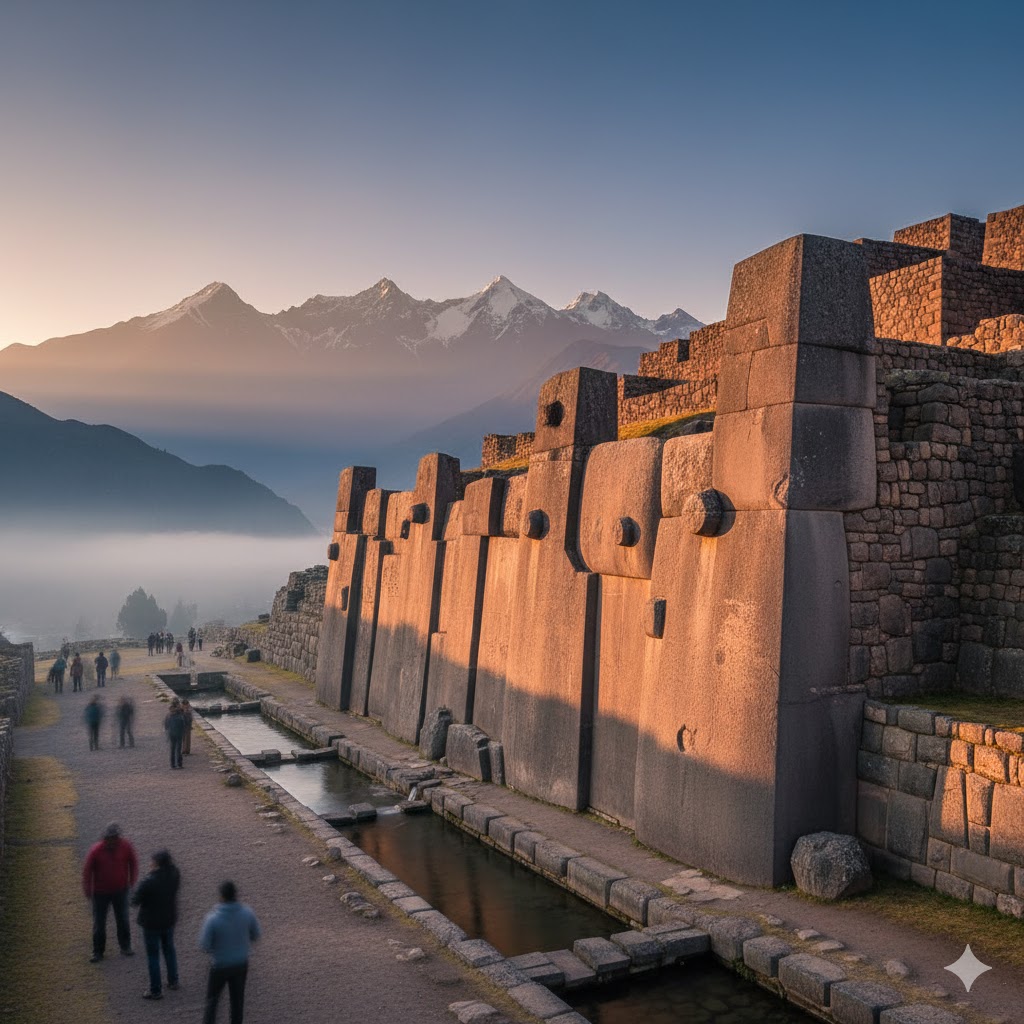
The Unanswered Questions
Ollantaytambo, much like Giza’s buried structures or the enigmatic Longyou Caves, challenges the mainstream archaeological narrative. The evidence points to:
- A pre-Inca civilization with “lost” construction techniques capable of moving and shaping colossal stones with unparalleled precision.
- An advanced understanding of hydraulics, possibly integrated with subterranean structures for seismic stability or energy generation.
- A global pattern where later, less technologically advanced cultures built upon the monumental remnants of a much older, unknown precursor.
The stones of Ollantaytambo are not merely silent; they are actively whispering secrets of humanity’s true origins. It’s a testament to ingenuity, mystery, and a history that is only just beginning to reveal its true, monumental scale.
“The Quartz Battery: Why Rose Stone?”
“From the King’s Chamber in the Great Pyramid to the Temple of the Sun in Ollantaytambo, the ancients had a fetish for Rose-colored, high-quartz stone. These aren’t just building materials; they are piezoelectric conductors. They hauled them across rivers and deserts not for the color, but for the Frequency.“
Further Reading on signalvsnoise.is:
- Ancient Megaliths: The Giza Plateau: Pyramids, Voids, and Muon Tomography
- Lost Technologies: The Enigma of Baalbek: 800-Ton Stones and Impossible Precision
- Archaeological Anomalies: The Chincana Labyrinth: Cusco’s Recently Confirmed Underworld